

- Gift & Luxury Packaging
- Luxury Health & Beauty Packaging
- Bakery & Cake Packaging
- Candle Packaging
- Cardboard Packaging
- 4-Pack Bottle Carriers Boxes
- Booklet Printing
- Apparels Boxes
- Corrugated Boxes
- Custom Boxes
- Cardboard Boxes
- Display Boxes
- Greeting/Business/Header Cards
- Hexagon Boxes
- Five Panel Hanger Boxes
- Gable Boxes
- Dispenser Boxes
- Labels & Stickers
- Sleeve Boxes
- Pillow Boxes
- Paper Bags
- Subscription Boxes
- Tuckend Boxes
- Two Piece Boxes
- Window Boxes
- Popcorn Packaging


What Is a Sleeve in Packaging and Why Smart Brands Are Switching to It?
In the world of packaging, invention and versatility are crucial to standing out on crowded store shelves and furnishing a superior client experience. One packaging result that has gained significant fashionability in recent times is the sleeve. But what exactly is a sleeve in packaging, and why is it getting an essential tool for brands across diligence? In this comprehensive companion, we will explore the conception of sleeves in packaging, their types, benefits, operations, and how they can elevate your product donation.
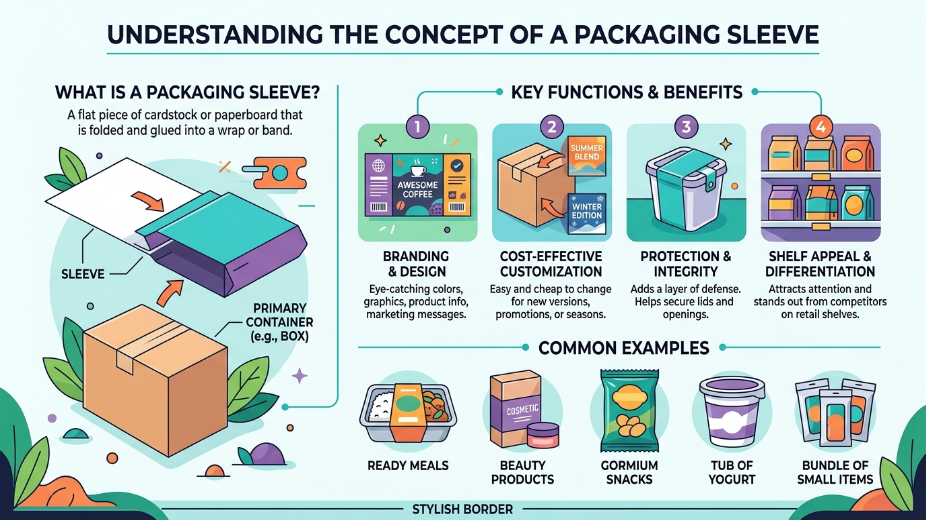
Understanding the Concept of Sleeve in Packaging
At its core, a sleeve packaging refers to a type of wrapping or covering that slides over a product or vessel to give an fresh subcaste of branding, protection, or ornamental appeal. Unlike traditional boxes or cartons, sleeves are generally designed to be flexible, featherlight, and easy to apply. They’re frequently made from accoutrements like paperboard, cardboard, or plastic and are acclimatized to fit specific product confines. The primary purpose of a sleeve is to enhance the visual appeal of a product, communicate imprinting dispatches, and occasionally serve functional places similar as tamper-substantiation or product security. Sleeves can be used as standalone packaging or in combination with other packaging factors, making them a protean choice for colorful diligence.
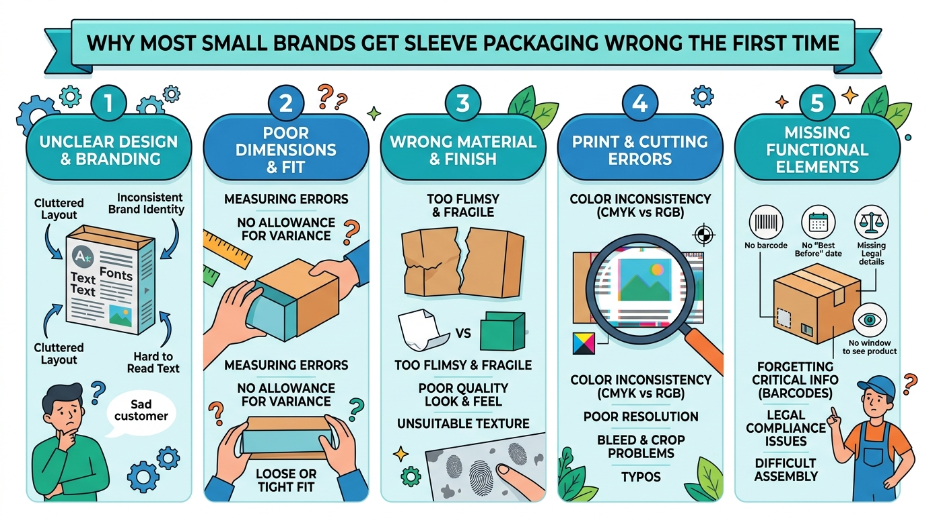
Why Most Small Brands Get Sleeve Packaging Wrong the First Time
A client of mine a skincare brand doing around $6k a month on her Shopify store spent weeks perfecting her serum formula but chose her sleeve packaging in about ten minutes from a generic template site. The sleeves arrived, looked fine in photos, but the moment she put them on her frosted glass bottles, they bubbled at the edges and the colors looked nothing like her brand. She had to reorder everything. That one rushed decision cost her nearly $1,200 and delayed her launch by three weeks. I’ve seen this happen more times than I’d like to admit. Here’s the thing sleeve packaging isn’t just a label you slap on a product. It’s a structural and visual decision that affects how your product feels in someone’s hand, how it photographs for social media, and whether a retail buyer takes you seriously on a shelf. And honestly, most suppliers won’t tell you this upfront, but the material you choose matters just as much as the design. A paperboard sleeve on a premium candle gives a completely different brand signal than a shrink sleeve on the same product. According to PMMI’s State of the Industry report, packaging-related returns cost US ecommerce brands over $1.5 billion annually and a significant chunk traces back to poor material-to-product compatibility. What most sellers miss is that getting the fit right from the start saves you money, headaches, and customer complaints down the road. If you’re selling boxed products that need that extra layer of presentation, well-made give you both structure and visual polish without overcomplicating your packaging line. And if you’re pairing sleeves with an outer box for gifting or retail bundles, combining them with quality creates a full unboxing experience that customers actually remember — and post about.
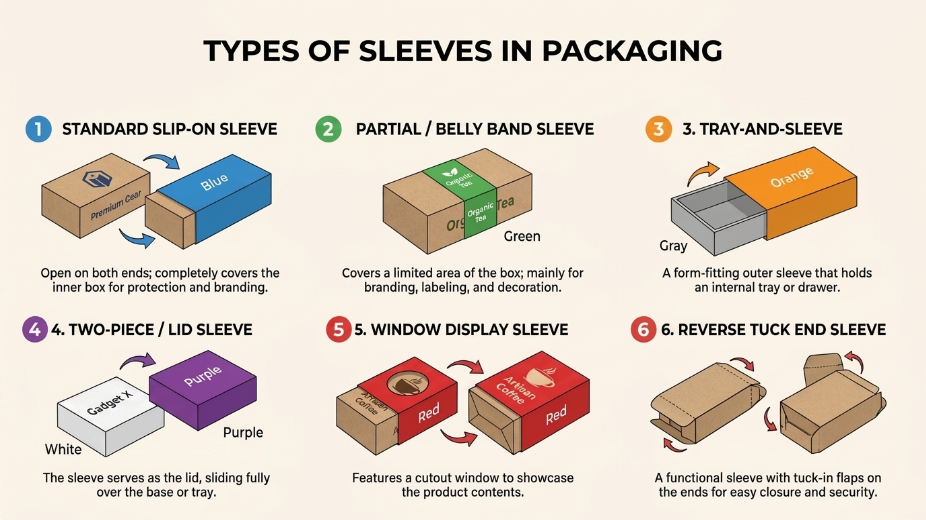
Types of Sleeves in Packaging
There are several types of sleeves used in packaging, each serving different purposes and offering unique advantages. Understanding these types can help brands choose the most suitable option for their products.
Shrink Sleeves: Shrink sleeves are made from supple plastic flicks that conform tightly around a product when heat is applied. They’re popular for their capability to produce eye-catching, full-content plates that can wrap around desultorily shaped holders. Shrink sleeves are generally used in libation bottles, ornamental jars, and food holders. Their inflexibility allows for 360-degree branding, making them ideal for vibrant designs and detailed artwork.
Sleeve Labels: Sleeve markers are pre-cut paper or plastic markers that slide over a product or vessel. They’re generally made from printable accoutrements and can be customized with ensigns, product information, or ornamental patterns. Sleeve markers are generally applied manually or with automated ministry and are used considerably in the libation, food, and medicinal diligence.
Collapsible or Fold Sleeves: These sleeves are made from thicker cardboard or paperboard and can be folded or collapsed for easy storehouse and shipping. When applied, they expand to fit a vessel snugly. Collapsible sleeves are frequently used for promotional packaging, gift sets, or product speeding, furnishing a ultraexpensive look and feel. Brands looking for this premium presentation often invest in custom sleeve boxes that reflect their identity from the outside in.
Wrap-around Sleeves: Wrap-around sleeves are stretched strips of material that wrap around a product or vessel, frequently lapping for a flawless appearance. They’re ideal for spherical or blockish packaging and can be published with high-resolution plates for imprinting purposes.
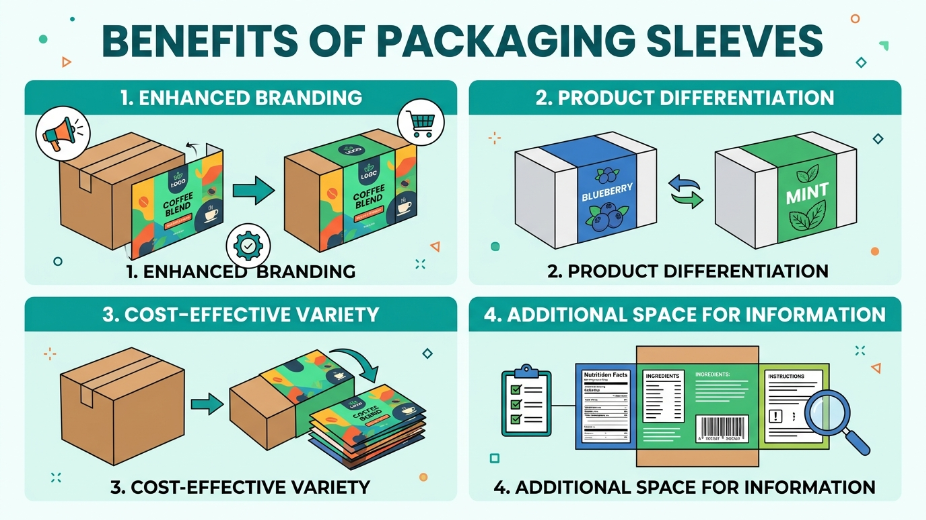
Benefits of Using Sleeves in Packaging
Incorporating sleeves into your packaging strategy offers multitudinous advantages that can enhance both the aesthetic appeal and functional performance of your products.
Enhanced Branding openings: Sleeves give a large, visible face area for branding, messaging, and artwork. Full-content shrink sleeves, in particular, allow brands to produce vibrant, eye-catching designs that allure consumers. Custom printing on sleeves helps support brand identity and makes products fluently recognizable.
Cost-Effective Customization: Compared to full-box packaging, sleeves are frequently more affordable to produce, especially when ordered in bulk. They can be customized with colorful colors, homestretches, and designs without the need for precious molds or driving. This inflexibility makes custom sleeve boxes an seductive option for small to medium-sized brands looking to stand out without breaking the bank.
Versatility and comity: Sleeves are adaptable to different vessel shapes and sizes, making them suitable for a wide range of products from bottles and jars to boxes and cartons. Their slim profile reduces packaging weight and volume, which can lower shipping costs and ameliorate logistics.
Improved Product Protection and Tamper substantiation: Certain types of sleeves, similar as shrink sleeves, offer a tamper-apparent point. Once heat-shrunk onto a vessel, they give a secure seal that indicates whether the product has been opened or tampered with. This adds an redundant subcaste of safety and consumer confidence.
Sustainability and Eco-Friendliness: Numerous sleeve accoutrements are recyclable and made from eco-friendly substrates, aligning with the growing consumer demand for sustainable packaging options. Also, sleeves induce lower waste compared to larger, more complex packaging formats.
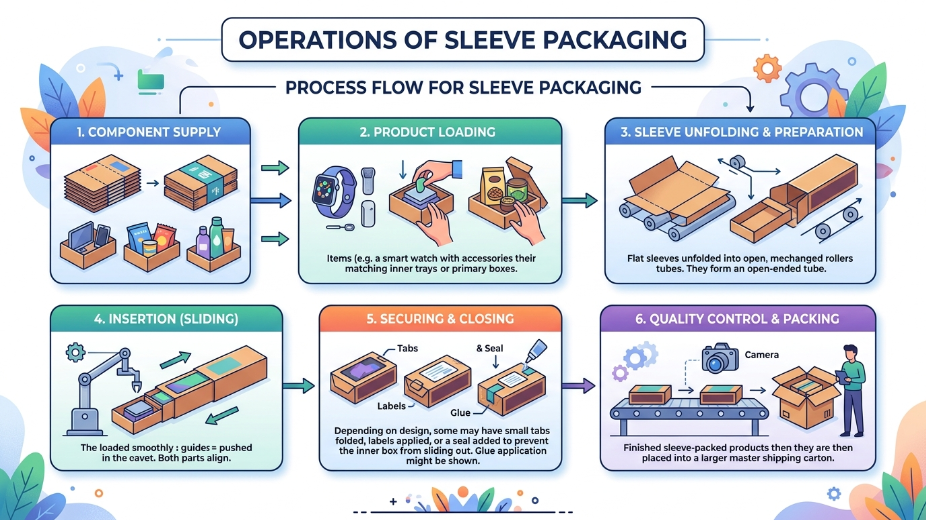
Operations of Sleeve Packaging
Sleeve packaging is incredibly protean and finds operations across multitudinous diligence. Some of the most common uses include:
Beverage Industry: Shrink sleeves are extensively used for bottled potables similar as water, soft drinks, energy drinks, and alcoholic potables. They allow for vibrant, full-content plates and can be used for tamper-apparent seals.
Food Industry: Food products like jars of gravies, seasonings, and snack holders frequently use sleeve markers or shrink sleeves for branding and information display. Sleeve packaging also enhances the visual appeal of decoration or artisanal food particulars.
Cosmetic and Personal Care: Cosmetic products similar as creams, poultices, soaps, and scents profit from the satiny appearance of sleeve packaging. It helps convey luxury and quality while furnishing space for branding and component information.
Pharmaceutical and Healthcare: Sleeve markers are generally used on drug bottles, lozenge holders, and health supplements. They give a tamper-apparent seal and space for pivotal product details.
Gift and Promotional Packaging: Collapsible or fold sleeves are perfect for gift sets, promotional packets, or special edition products, offering a ultraexpensive look with customizable designs.
Design Considerations for Sleeve Packaging: Creating effective sleeve packaging requires attention to several design rudiments. High-resolution plates, vibrant color schemes, and clear branding are essential. It’s important to choose the right material that balances continuity with sustainability. Also, considering the ease of operation and junking can ameliorate the stoner experience. For shrink sleeves, comity with heat-shrinking outfit and proper sealing ways are critical to achieving a perfect fit.
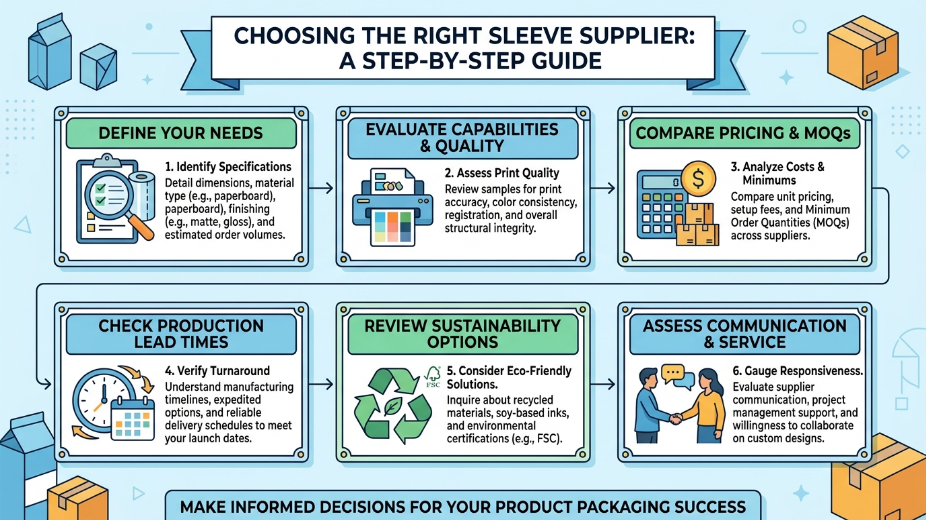
Choosing the Right Sleeve Supplier
Partnering with a estimable sleeve packaging supplier ensures quality, thickness, and timely delivery. Look for suppliers who offer customization options, eco-friendly accoutrements, and advanced printing technologies. Samples and prototypes can help you assess the quality of the sleeves before committing to large orders. When you invest in well-designed custom product packaging boxes you set your brand apart from competitors who settle for generic solutions. Also, interrogate about minimal order amounts, supereminent times, and pricing to insure the supplier can meet your business requirements.

Related posts

What Paper Is Stylish for Rigid Boxes?
Greyboard's Function in Rigid Boxes
Greyboard, occasionally appertained to as chipboard, is the most extensively used core paper mat...

What Are Cake Boxes Really Made Of? Materials That Keep Your Bakes Safe and Fresh
Paperboard and Cardboard
The most frequent accoutrements for cake boxes are cardboard and paperboard. They're robust and light, so t...

Who Sells Seasonal Candle Collections with Premium Packaging?
Candles have been loved for a long time as symbols of warmth, relaxation, and beauty. This makes them a popular choice for gifts and ho...